Product Review
•
28 min read
Motorcycles 125cc
The Most Durable 125cc Motorcycles: BIFL-Picks for Decades – Top Models, Community Insights & Buying Recommendations at a Glance
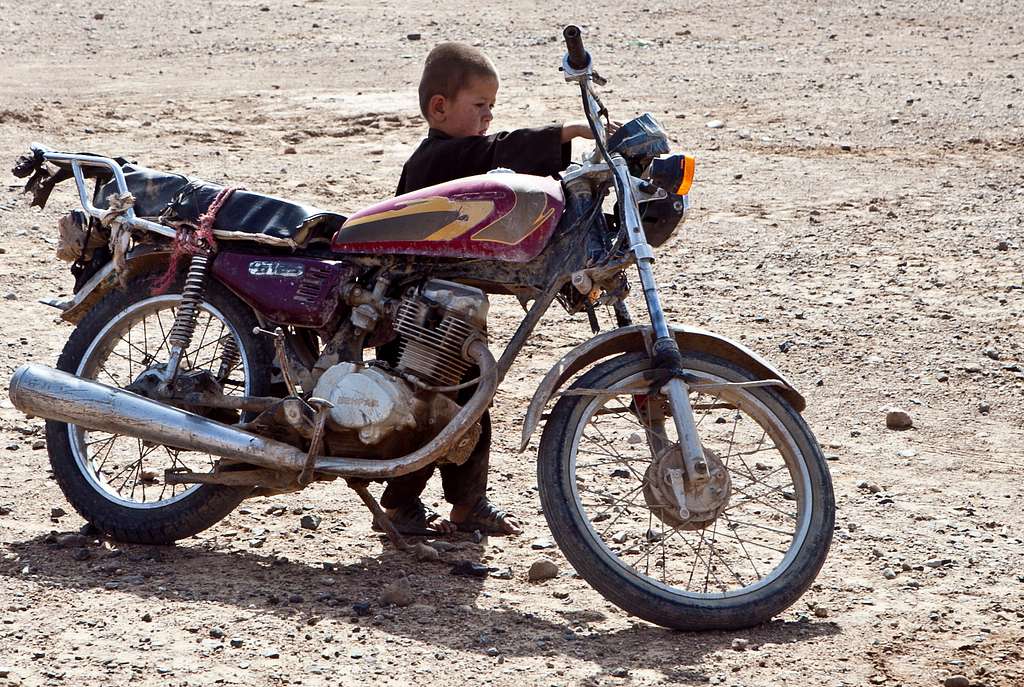
The Most Reliable 125cc Motorcycles That Can Last Decades
(Based on long-term community reports from motorcycle forums, Reddit, endurance tests, and real owner experiences.)
Last updated: March 10, 2026
Top Picks 🏅
Short on time? Here’s the bottom line:
9,3/10 Points
Honda CG125 – The Bike That Will Outlive You
Its promise: To be bulletproof. The legendary OHV engine without a timing chain makes it one of the lowest-maintenance motorcycles ever built.
Ideal for purists and pragmatists who want an honest machine that still starts on the first kick—even after years of neglect.9,2/10 Points
Honda Super Cub 125 – A Rolling Piece of World Heritage
Efficiency meets everyday usability: semi-automatic transmission, fully enclosed chain, and incredibly simple maintenance.
Perfect for scooter fans who want a low-maintenance piece of engineering history for city life.9,1/10 Points
Suzuki VanVan 125 – The Surfer Boy with Character
With its iconic balloon tires and relaxed ride, this is more than a motorcycle, it’s a vibe.
Ideal for campers and slow travelers who want something charming, unique, and fun every single day.9,0/10 Points
Yamaha TW125 – The Unstoppable Tractor
Rugged meets adventurous. With DNA from the legendary XT series, this little all-rounder handles just about anything.
Perfect for explorers and outdoor riders who need a compact bike for trails and rough streets that just keeps going.8,8/10 Points
Suzuki GN125 / Yamaha SR125 – The Easy-Riders
Two sides of the same coin: solid engineering, no unnecessary complexity. These soft-choppers represent motorcycling in its simplest form.
Great for beginners and vintage lovers who want a reliable, lightweight bike with classic looks.
The Evolution of 125cc Motorcycles🏍️
Most products today are built for shorter lifecycles. Well motorcycles are no exception.
Think about how much modern bikes have evolved: ABS, traction control, electronic fuel injection, complex cooling systems, ride-by-wire throttles, keyless ignition, smartphone connectivity… the list keeps growing every year.
The result? Bikes are faster and safer, but not necessarily longer-lasting.
More electronics and highly optimized performance, combined with constant new model releases and expensive replacement parts, often mean modern bikes become economically unviable after just a few years.
The 125cc class has gone through a massive transformation. From smoky two-strokes to today’s electronically controlled, low-emission four-strokes.
So why don’t newer 125cc bikes last as long as older ones, despite better technology?
Because “lifespan” isn’t as simple as it sounds.
The 3 Types of Lifespan
Calendar Lifespan: With the right habits (letting the engine warm up, avoiding constant full throttle, regular maintenance, and garage storage), modern 125cc motorcycles can realistically last 15 to 20 years, with mileages well beyond 50,000 km (30,000+ miles). But why “can” and not “will”?
Because motorcycles first need to be on the market long enough to generate reliable data from users and workshops. After 3–5 years, around 80% of common weaknesses are typically known. After 8–10 years, about 80% of long-term durability becomes clear. If a 125cc bike reaches 50,000 km without any need to open the engine, it belongs to the technical elite.Economic Lifespan: A new 125cc motorcycle typically costs around €3,000–€6,000. If, after 10 years, the bike is worth around €1,500 and suffers engine failure or major electrical issues, many owners decide against repairs once they see the workshop estimate.In these cases, a bike’s lifespan often ends at around e.g. 30,000 km, not because it can’t be repaired, but because the repair cost outweighs the remaining value. Complex technology usually means complex repairs and that usually means expensive repairs. In other words: a financial write-off.
Technical Lifespan: If money isn’t a concern (or you enjoy working on your own bike), the technical lifespan of a motorcycle is almost unlimited. In theory, any worn or damaged part can be replaced. However, the technical lifespan eventually ends when spare parts are no longer available, certain technologies become obsolete (e.g. outdated connectivity systems), or the knowledge required to maintain the bike disappears over time.
Why Even Choose a 125cc Motorcycle? 🤔
Depending on where you are in the world, a 125cc motorcycle serves completely different roles. From a vital workhorse to a lifestyle accessory:
Asia, Africa, Latin America – The Workhorse
In many regions, a 125cc is close to essential. It replaces the family car, serves as an affordable taxi, and functions as both a transport solution and a working tool.Europe – The Urban Solution
Here, it’s the answer to traffic congestion and parking shortages. Supported by simplified licensing rules, it’s widely used as an efficient commuter vehicle or a stylish everyday companion.USA – Toys for Boys (and Girls)
In the US, highways and long distances set the pace. As a result, 125cc bikes remain a niche product, either as fun mini bikes for leisure or as compact “tenders” carried along with RVs.
Advantages of 125cc Motorcycles 👍
So why are these little machines so popular across the globe?
Simple: they just make a lot of sense. Here’s what speaks in favor of a 125:
Low purchase and running costs
Let’s start with the obvious: they’re cheap and that not just upfront:Low purchase price
Fuel consumption of just 2–3L / 100 km (compared to 6–8L for a 1000cc sportbike)
Affordable insurance
Lower service and repair costs (One cylinder instead of four means less labor, less oil, fewer parts and fewer things that can go wrong. Your wallet will notice that.)
Perfect for city riding
In crowded cities, a small, nimble motorcycle is basically a cheat code. You glide past traffic, squeeze into parking spots cars can only dream of, and in many places, you even park for free, while car drivers slowly lose both time and sanity.Big bikes are overkill in the city
Let’s be honest: riding a 1000cc, 150-hp superbike in a 30 mph zone is… absurd. You could do the entire commute in second gear, barely touching the throttle. The engine runs inefficiently, burns more fuel than necessary, and feels about as appropriate as cleaning your glasses with a pressure washer.Forgiving for beginners
125s are workhorses, not racehorses. And that’s exactly what makes them great for beginners. Less power means fewer dramatic mistakes. There’s a reason so many riders in Europe start here. Because if you mess up on a high-powered machine at speed, you might not get a second chance. Also: a bike that doesn’t constantly stall, slide, tip over, or overwhelm its rider tends to live a longer life.Everyday usability
Lightweight bikes are simply easier to live with. Easier to maneuver, easier to park and easier to transport (for example as a “tender” on a camping trip). They fit into real life without friction.Easy license access
In the EU, motorcycle licenses are tiered and 125cc sits right at the entry point. Most models qualify for A1 licenses or special car license extensions. That means: no full motorcycle license required, just a few training hours and you’re good to go.
Of course, it’s not all sunshine and cheap fuel.
Let’s talk about the downsides next.
Downsides of 125cc Motorcycles 👎
As much as we like them, 125s aren’t perfect.
Here’s where the limits start to show:
Limited power reserves
Overtaking on country roads can get… interesting. You need patience, planning, and good judgment, because when things get tight, there’s often not enough power to “accelerate your way out” of trouble.Not ideal for highways or fast roads
Most 125cc bikes struggle to even reach a true 100 km/h (62 mph) under real-world conditions. That “110 km/h” on the speedometer? More like 95–100 km/h in reality. To keep up with traffic at those speeds, the engine is basically running flat out the entire time. Add in the low weight, and suddenly wind gusts at passing trucks become part of the experience, whether you like it or not.Lacking emotional punch
Sure, many 125s look like proper motorcycles. But the deep exhaust note, the effortless torque, the feeling of carving through corners with power in reserve, that’s something you only really get with bigger bikes.Sensitive to weight
Add a passenger, some luggage, or a few extra kilos yourself and performance drops quickly. Hills turn into slow-motion climbs, and both rider and engine probably need more patience than you are willing to give.Vibrations at higher speeds
Because 125s spend a lot of time at higher RPMs, especially on open roads, vibrations can creep in. After a while, that can mean tingling hands and feet, your body reminding you that this engine is working hard.Very little technical buffer
Most 125cc engines run with around 1 liter of oil. That means even small oil loss or slightly overdue service intervals can lead to engine damage much faster than on larger bikes. There’s simply less margin for error.Why people actually sell them
Interestingly, most 125s aren’t sold because they break. They’re sold because riders upgrade to something bigger.
So what’s the takeaway? A 125cc motorcycle is, at its core, a relaxed urban machine that feels most comfortable up to around 80 km/h (50 mph). If that’s all you need, you’ll probably love it. If you expect more, you might end up disappointed.
At first glance, you might think a 125cc bike is automatically built to last forever. Small engine, low power, mature technology - sounds like a perfect recipe for longevity, right? Not quite.
To understand which bikes actually last, we need to look at something more important:
What usually kills a 125cc motorcycle in the first place.
What Usually Kills 125cc Motorcycles (Failure Modes)💣☠️
Not every hiccup on a bike is dramatic. Tires, chains, brake pads, spark plugs, filters, or batteries? Totally normal wear-and-tear an mostly cheap to replace. Standard service intervals are usually every 5–10k km or yearly (whichever comes first) and will cost you about €100–250.
The real deal-breakers are the rare failures that make repair barely worth it, or even impossible. These are the failure modes that decide whether your 125cc still cruises happily after 10 years, or ends up as a parts donor.
1. Cold starts with consequences
125s are a bit picky about warming up. A 1000cc bike can roll out of the driveway at 2,000 RPM. A 125? Often immediately slammed to 7,000–9,000 RPM just to keep up with traffic.
Problem: The oil is still thick and sluggish. Pistons and cylinders start to wear at warp speed.
2. Engines constantly pushed to the limit
If you ride your 125 at 100 km/h on country roads, you’re basically doing this at:
Full throttle
High RPM
Right at the engine’s limit
Sustained 9,000+ RPM? That’s serious heat and stress. Small singles have only about 1 liter of oil, which has to lubricate engine, valves, and gearbox. Hot oil ages fast. Even a small leak or missed oil change can cause the film to break, and goodbye engine. Repairs often aren’t worth it.
3. Timing chain and neglected valve clearance
Another classic weak spot: the valve train.
Most modern 125s use OHC engines driven by a timing chain. All fine, as long as chain, tensioner, and guides behave.
Typical failure:
Chain stretches
Tensioner wears
Valve timing drifts
Worst-case: chain jumps → valves hit pistons → expensive disaster.
Add tight valve tolerances and skipped checks: valves start “sitting in the wrong spot,” combustion gases leak past, valve seats burn, compression drops, and starting the motorcycle becomes a nightmare.
4. Electrical and sensor issues
Bikes are getting more electronic by the year.
Common failures:
Lambda sensors
Throttle position sensors
Regulators / rectifiers
OBD modules
ABS modules
Corroded connectors
Broken sensors? Misfires, starting problems. Expensive modules? Easily four-digit bills. Older 125s often end up worthless vs. repair costs.
5. Cheap electrics on budget bikes
Forums love to complain about this: wiring harnesses and connectors on budget brands.
Symptoms:
Random no-starts
No spark
Sensor errors
Dead batteries
Cause: simple corrosion or poor insulation. Bad routing can even chafe wires. The problem is, such causes are often hard to diagnose, quickly inflates repair bills.
6. Maintenance mistakes
A special problem with the 125cc class is the rider demographic.
Many riders are beginners, very young, inexperienced with motorcycles, and - thanks to the relatively low purchase price - often a bit sloppy on maintenance and care.
Mechanics in forums frequently report:
Service intervals skipped (“gaps in the service book”)
Components like chains neglected
Failed DIY tuning experiments
Cold engines revved hard instead of being warmed up
Bikes pushed to the limit constantly
Bikes left outside all year round
All of this leads to the problems we already mentioned and sometimes to serious damage. And yes, of course, there are exceptions.
7. Weather and corrosion
One commonly underestimated factor in long-term reports: where the bike lives.
The difference between:
Garage-kept
Outside all year
…is huge for motorcycles.
Constant exposure to the elements leads to:
Rust on the frame
Corroded connectors
Worn bearings
Oxidized wires
Broken idiots trying to steal your bike
Drunk idiots trying to do silly things with or on your bike
Other idiots damaging your bike
Many 125s live outdoors permanently - and age much faster as a result.
Especially brutal is the combo of snow and road salt. Salt holds moisture and accelerates corrosion like hell.
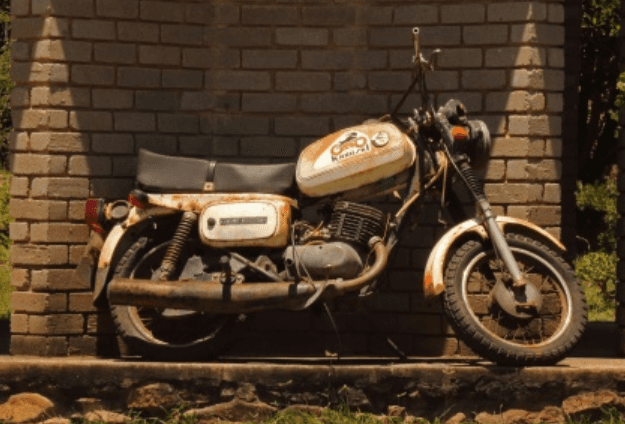
8. The spare parts trap
The final failure mode has less to do with mechanics and more to do with market dynamics.
A bike can be bulletproof, but without spare parts, it’s basically worthless.
Most affected:
Short-production models
Small brands with weak dealer networks and low market share
Cheap imports with no long-term support
After ten years, if crucial parts like ECUs or engine components for your model aren’t available anymore, even a small defect can turn into a disaster.
And if the parts do exist? Well, you also need to afford them:
Quick comparison: In the ’90s, a 125cc bike had about 1,000 parts. Modern versions? Around 2,000 parts. The mechanical core and engine haven’t changed much - most of the extras are electronics, emissions gear, and ABS. And yes, every new part is a potential failure point.
To be clear: Safety systems like ABS are absolutely worth it. But have you ever checked the repair cost of a broken ABS?
Take, for example, Brixton. Still on the cheaper side (new Crossfire 125 LC: ~€3,000, used after 3 years: ~€2,000):
Electrical kit with ECU: €1,000
Full gearbox kit: €850
Radiator kit: €750
ABS ECU: €700
Fuel injection kit: €550
PS: That’s just the parts, if you like to DIY. Otherwise, add mechanic labor on top.
What makes a 125cc a BIFL bike?❤️
A BIFL motorcycle isn’t about maximum horsepower, it’s about a bulletproof design that prevents the failure modes we just talked about.
It’s the bike where you can’t remove a single thing without breaking its function. It’s simple enough that decades later, it’s still serviceable, repairable, and economically sustainable to be operated. To qualify as BIFL, a bike needs to tick these boxes:
1. Simple, robust construction
Low-tech instead of high-tech: Fewer parts automatically mean fewer things that can break. Fewer sensors, ECUs, and specialty components also mean easier diagnostics and cheaper repairs.
Air cooling instead of liquid cooling: No water pump, no radiator, no hoses. What isn’t there can’t leak or break.
Low power density and moderate revs: Engines squeezing only 10–12 HP out of 125cc run far below their mechanical limits, reducing wear and heat stress.
Durable materials: Metal instead of cheap plastic, high-quality corrosion-resistant coatings on the frame and swingarm.
2. Maintenance-friendly and repair ethos
DIY-friendly: A bike only lasts if it’s maintained regularly. A BIFL bike is designed so that a novice with standard tools and a service manual can do an oil change in 15 minutes, and you don’t have to strip half the bike just to reach the spark plug.
Carburetor vs. EFI: Here’s the debate. EFI is technically superior, more reliable, efficient, and doesn’t gum up if the bike sits three months over winter. Also no choke hassle with EFI. But EFI is also a complex electronic component, and repairs are trickier and pricier. And Carburetors? Simple, electronics-free, fixable with a YouTube video. In the EU, new models have EFI mandatory since 2008.
3. Japanese brands with excellent spare part availability
If you want a bike for decades, you can’t ignore Honda, Yamaha, Suzuki, and Kawasaki. They’re famous worldwide for reliability, longevity, and build quality, especially Honda.
Spare parts guarantee: These brands produce similar bikes in large numbers for decades and keep parts available. Even after 20 years, originals are easy to find worldwide.
Mechanic familiarity: Every workshop on the planet knows these brands. High-mileage reports of 50,000+ km are common, not exceptional.
4. Proven long-term reliability
High-mileage reports are the ultimate test. Some 125s regularly hit 100,000 km or more. Mechanics and long-term riders consistently report the same brands, engines, and models running reliably for many years. Real-world experience like this often beats any spec sheet.
5. Everyday usability
A BIFL bike needs to work in real life, too. If you plan to pass it down to kids or even grandkids, practical factors matter:
Comfortable seat height for different riders
Moderate weight
Passenger-friendly for two-up rides
Good ergonomics
Light 125s also make great companions for campers or vans because they’re easy to transport.
6. Low operating costs
For many riders, the total cost of ownership is crucial. A good 125cc stands out for:
Low fuel consumption
Cheap maintenance
Long durability
Stable resale value
The most durable models lose value slowly, making them economical long-term.
7. Soft Factors
Of course, some less tangible stuff counts too:
Style and looks
Cult status
Pure riding fun
A bike that’s reliable and fun tends to stay much longer in your life.
Our testing methodology 🧮
We are not your typical product testers.
Instead, we curate long-term community knowledge.
We evaluate and weight these sources using our BIFLBENTO rating system (see individual reviews for the score) to turn the mass of experience into structured recommendations, always with one question in mind: Would a mechanic recommend this bike to their own family?
Our sources:
Reddit (r/BIFL, r/MotoUK, r/Motorcycles, etc.)
Motorcycle forums with long-term owner reports
ADVrider.com (the world’s largest adventure motorcycle community with thousands of documented long-term trips)
Workshop reports from mechanics (A journalist riding a bike for a day sees one thing, a mechanic seeing the same model for thirty years sees another)
Used market data
In the next chapter, we’ll look at specific models that combine all these traits exceptionally well: bikes that the community repeatedly calls indestructible long-term machines.
Results💎
From our research, the following BIFL formula for motorcycles has emerged:
Long-term use = Function / Durability × Economy × Emotional attachment
Below you’ll find the current best-of-the-best BIFL motorcycles in the 125cc category.
Honda CG125
Ask any mechanic or long-term rider which 125cc bike deserves the title bulletproof, and one name keeps popping up: Honda CG125.
Used price: 1,500 – 2,500 €
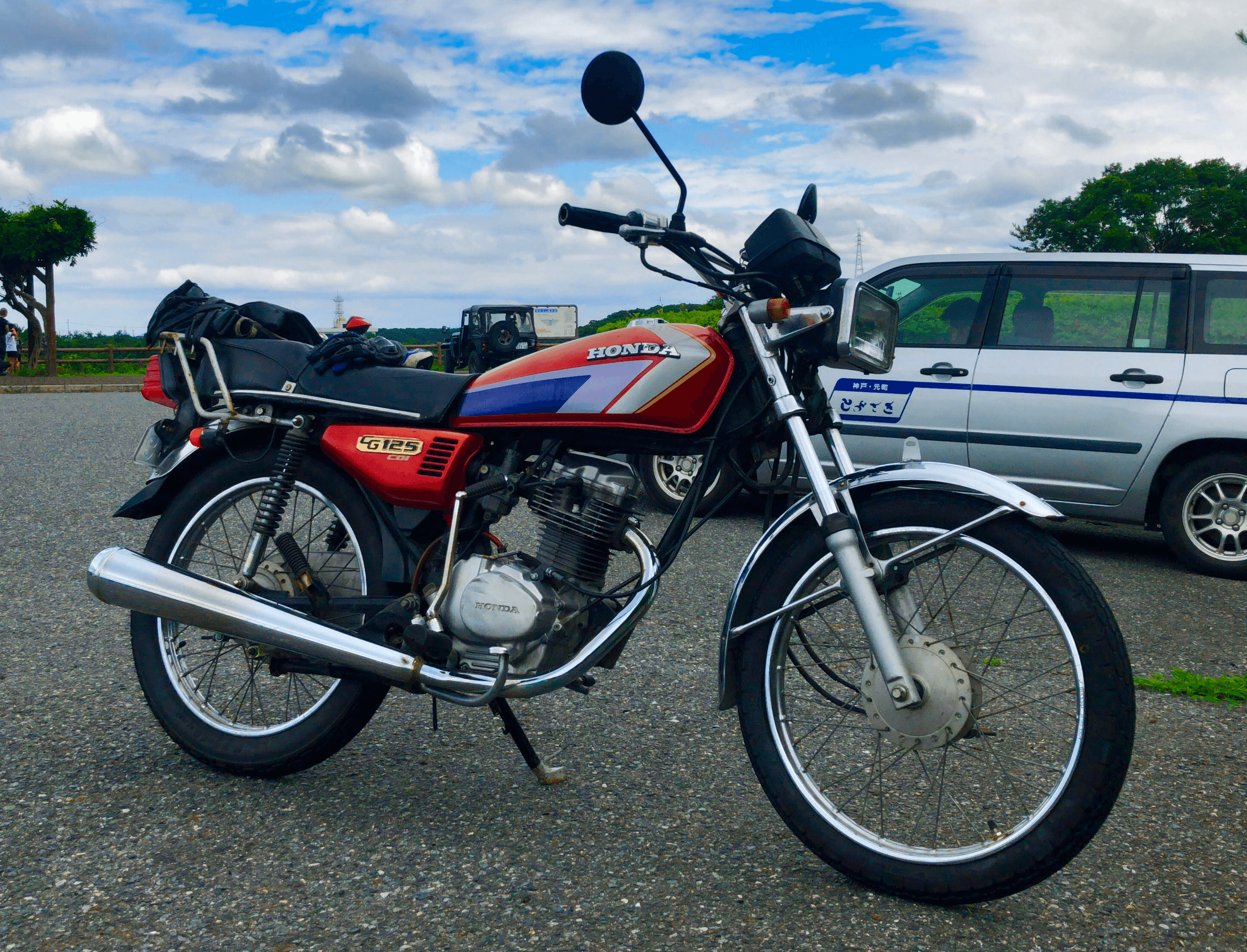
The idea behind the CG125
Back in the 1970s, Honda sent engineers across Southeast Asia and other developing regions. What they discovered would change how an entire motorcycle was designed:
Most riders barely maintained their bikes. Oil changes were skipped, air filters never cleaned, valve clearances never checked, and load limits routinely ignored.
Honda’s response was remarkable. Instead of building a fragile high-tech machine, they developed a bike based on the CB125 that wouldn’t break even under neglect. The answer hit the market in 1976: the Honda CG125.
The flat-slide carburetor can be taken apart, cleaned, and reassembled in about 30 minutes.
A washable, reusable foam air filter replaces the delicate paper type.
From around 1991, the CG125 features a simple 12-volt electrical system that even hobby mechanics can understand.
Weighing in at roughly 100 kg, it’s one of the lightest bikes in its class.
Dual seat for practical everyday use.
The crucial difference
The heart of the CG125 is its engine.
Instead of an overhead cam (OHC), it uses an OHV pushrod engine, meaning the valves are operated by pushrods. The big advantage: no timing chain, eliminating one of the main failure modes of modern 125s completely.
The engine is:
mechanically simple
air-cooled, not water-cooled
extremely robust
tolerant of neglect
It also features:
low compression
an exceptionally stable cranktrain
a very durable valve train
The result: an engine that simply doesn’t know pain.
A motorcycle for the global market
The CG125 was built from 1976 to 2008, mainly in Brazil and under license in various countries.
More than 30 million units were produced worldwide.
This massive production volume comes with a side effect that is crucial for BIFL:
A practically endless supply of spare parts.
That makes parts availability exceptionally strong.
Community voices
Among riders, the CG125 has reached almost legendary status.
“The CG125 will outlive you if you change the oil.”
“In some countries these bikes run 200,000 km as delivery bikes.”
One rider in a motorcycle forum writes:
“I ride a 1998 CG125. For ten years, just oil changes and one spark plug replacement. It always starts on the first kick.”
Stories like these are not rare. They are exactly why the CG125 is considered bulletproof worldwide. Everything about it is built for simplicity and durability.
Weaknesses
Of course, simplicity comes with trade offs.
The CG125 is:
very underpowered
extremely minimalistic
not particularly comfortable
It was never built to be sporty. It was built to work.
When buying, pay attention to the model year. The most recommended versions are from around 1991 to 2002, especially those produced in Brazil.
Later versions from around 2004 onward use the so called JC30 engine. This “optimized” engine is known for connecting rod issues. You can spot these models by the electric starter and the front disc brake instead of a drum brake.
Rating:
BIFL engineering (35%): 10/10
BIFL maintenance and repairability (15%): 10/10
BIFL spare parts availability and community support (15%): 10/10
BIFL functionality and everyday usability (15%): 8/10
BIFL economic efficiency (10%): 9/10
BIFL design and emotion (10%): 7/10
BIFLBENTO score: 9.3/10
Conclusion
If your goal is to buy a motorcycle that might outlive you, the CG125 is probably the best choice.
Suzuki VanVan 125 (RV125)
Recommended model years (with EFI): 2007 to 2013
Production years: 2003 to 2017
Used price: approx. €2,500 to €3,500
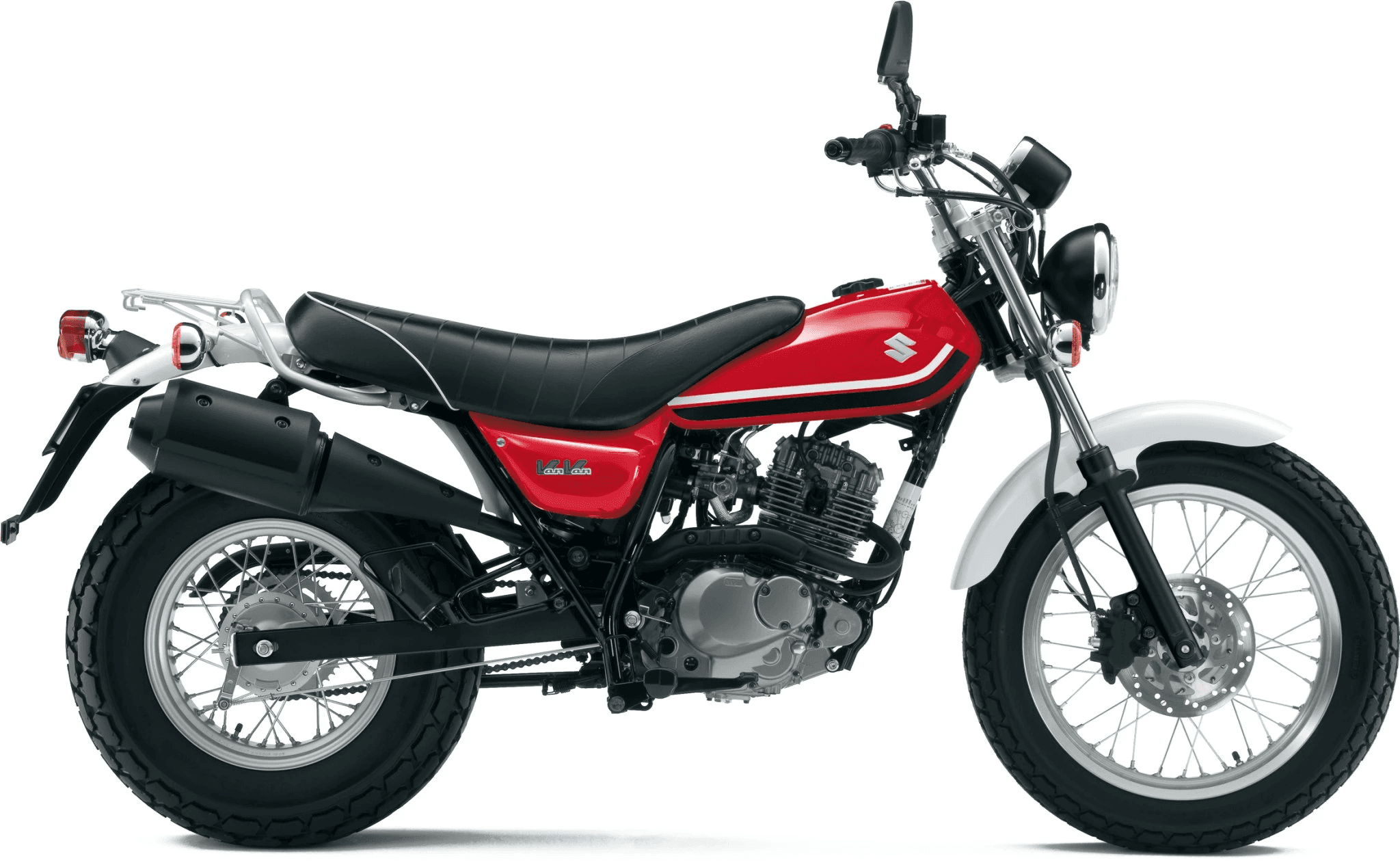
The VanVan is one of the most unusual 125cc motorcycles ever built. Originally inspired by beach and farm bikes from the 1970s, Suzuki combined an extremely simple technical layout with relaxed geometry and its signature balloon tires in the modern RV125.
The result: a motorcycle that was never meant to be fast but instead is incredibly forgiving, robust, and surprisingly long lasting.
Why the VanVan has BIFL potential
The key factor is its very conservatively designed engine.
The air cooled 125cc single cylinder with SOHC valve train comes from an engine family Suzuki has used across multiple models for decades. Mechanics consider these engines highly durable because they are:
air cooled
low in power density
subject to very low thermal stress
mechanically simple
The fuel injected version from 2007 replaced the carburetor and is also considered very reliable, as Suzuki used a simple and robust EFI system here.
Many mechanics also highlight the extremely accessible layout. The engine sits exposed in the frame, with almost no bodywork around it. Maintenance tasks like:
spark plug
air filter
oil change
valve clearance
…are quick and easy to handle.
This makes the VanVan a motorcycle that is especially DIY friendly and rewarding to work on.
Another BIFL factor: the chassis philosophy
The VanVan is intentionally built to be relaxed and easygoing.
Typical characteristics:
wide balloon tires
long wheelbase
very relaxed seating position
high passenger comfort
low power
The result is a motorcycle that is mechanically under low stress and rarely “abused” by beginner riders. That alone significantly increases its real world lifespan.
Community
In forums and long term reports, the VanVan is often described as surprisingly durable.
Typical comments:
“This bike is basically impossible to stall and incredibly durable.”
“Simple engine, simple bike, nothing really goes wrong.”
Many owners report strong everyday usability with minimal maintenance effort.
Another plus: thanks to its modest power, the engine runs with very low vibration for a single cylinder, which reduces long term wear on materials and fasteners.
The VanVan is often seen as a fun bike that just happens to be very long lasting.
Weaknesses
There are a few things to be aware of:
Corrosion protection
Like many Japanese bikes from the 2000s, the paint protection is not perfect, especially on bolts, spokes, and the exhaust. Year round winter use can leave visible marks fairly quickly.
Rear shock stone chips
Forums often recommend adding a mud flap. Without protection, stones from the rear wheel can hit the shock directly.
Power
With around 12 horsepower, the VanVan is on the relaxed side. Highway riding is possible, but it is not where it feels most at home.
PS: There is also a 200cc version with noticeably more torque and about 5 to 10 km/h higher top speed. For many riders, it is the more “grown up” version of the VanVan without losing its character.
Rating:
BIFL engineering (35%): 9/10
BIFL maintenance and repairability (15%): 9/10
BIFL spare parts availability and community support (15%): 9/10
BIFL functionality and everyday usability (15%): 9/10
BIFL economic efficiency (10%): 9/10
BIFL design and emotion (10%): 10/10
BIFLBENTO score: 9.1/10
Conclusion
The Suzuki VanVan 125 is not a classic commuter bike and not a performance machine either.
It is an extremely relaxed cult motorcycle with very simple engineering and surprising durability.
If you:
value character more than speed
enjoy working on your own bike
are looking for a simple leisure motorcycle
then the VanVan is one of the most charming and long lasting 125cc bikes out there.
In short:
Cult status meets Japanese reliability.
Yamaha SR125
If you browse motorcycle forums and ask about a simple, long lasting 125cc bike, the Yamaha SR125 keeps coming up. It is essentially the little sister of the SR500.
It is not an exotic cult bike like the VanVan and not a global workhorse like the CG125.
Instead, it is something else entirely: a classic motorcycle in its purest, simplest form.
Used price: around €1,200 to €2,500
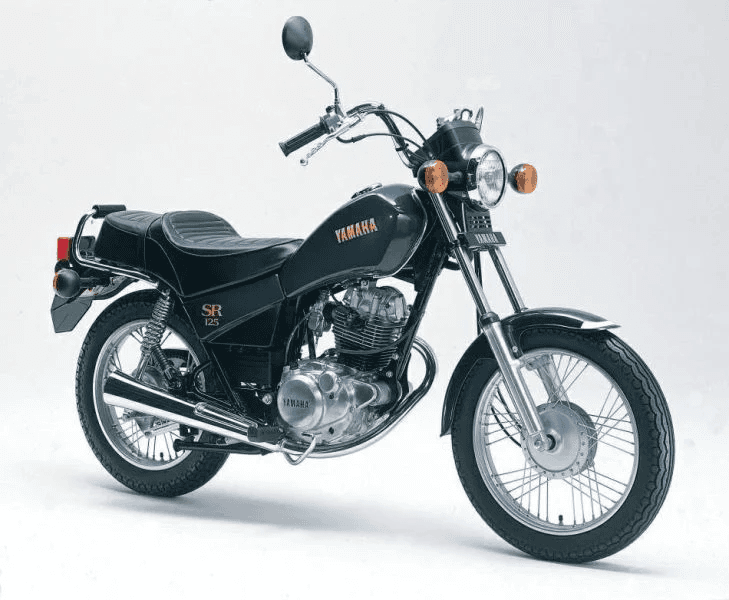
The BIFL Softie
Back in the 80s and 90s, there was a trend called the “soft chopper.” Yamaha took the heart of their off road capable XT125 and wrapped it in a classic design with chrome, spoked wheels, and a low seat. The result was the SR125 a motorcycle that never tried to be a race machine but simply aimed to be a loyal companion for decades.
What you get instead:
air cooled single cylinder
simple carburetor
classic steel frame construction
minimalistic electrics
Mechanics like to describe the SR125 with a simple comparison:
“It’s as simple as a hammer.”
The heart of the SR125 is an air cooled single cylinder with an overhead camshaft.
Unlike the CG125, Yamaha uses a classic OHC engine here.
That means it does have a timing chain, but the engine is so conservatively designed that it rarely causes issues.
Strengths in detail
Proven DNA: The engine is almost identical to the legendary XT series, which was built for round the world journeys.
very simple and robust construction
air cooled single cylinder engine with low stress levels
good spare parts availability
very maintenance friendly
timeless retro design
The SR125 is a classic example of a motorcycle that is not spectacular, but consistently reliable over the long run.
Weaknesses
Of course, this simplicity has its limits.
The SR125 is:
not particularly powerful
rather basic in its features
With around 12 horsepower, it is no rocket, but a reliable partner for slowing things down.
If you ride it in winter, be prepared to clean it. Chrome does not like road salt.
It also has a timing chain, unlike the CG125. Not a major issue, but still an additional maintenance point.
Community
In forums, the SR125 is often described as a bike you simply never end up selling.
“I originally bought it as a cheap commuter. Now I’ve had it for eight years and see no reason to ever let it go.”
“I’ve owned my SR for 15 years. It sat in a shed for three winters, new battery, one pull of the choke and it runs.”
“The SR is like a good pair of jeans: it develops patina over time, but it just doesn’t break.”
“It’s the bike you keep even after you buy bigger bikes.”
Many owners keep their SR125 as a second bike for life.
Rating:
BIFL engineering (35%): 9/10
BIFL maintenance and repairability (15%): 9/10
BIFL spare parts availability and community support (15%): 9/10
BIFL functionality and everyday usability (15%): 8/10
BIFL economic efficiency (10%): 9/10
BIFL design and emotion (10%): 8/10
BIFLBENTO score: 8.8/10
Conclusion
The SR125 follows a different philosophy than many modern 125cc bikes.
It does not try to be sporty or technically impressive.
It is a classic motorcycle that simply works and can be kept alive for decades.
For many riders, that is exactly why they keep their SR125.
Suzuki GN125
Visually, the GN125 looks very similar to the Yamaha SR125. Both bikes come from the same early 80s philosophy: a simple “soft chopper” for everyone, built so straightforward that it basically only dies from neglect.
That is why we will focus only on the differences here.
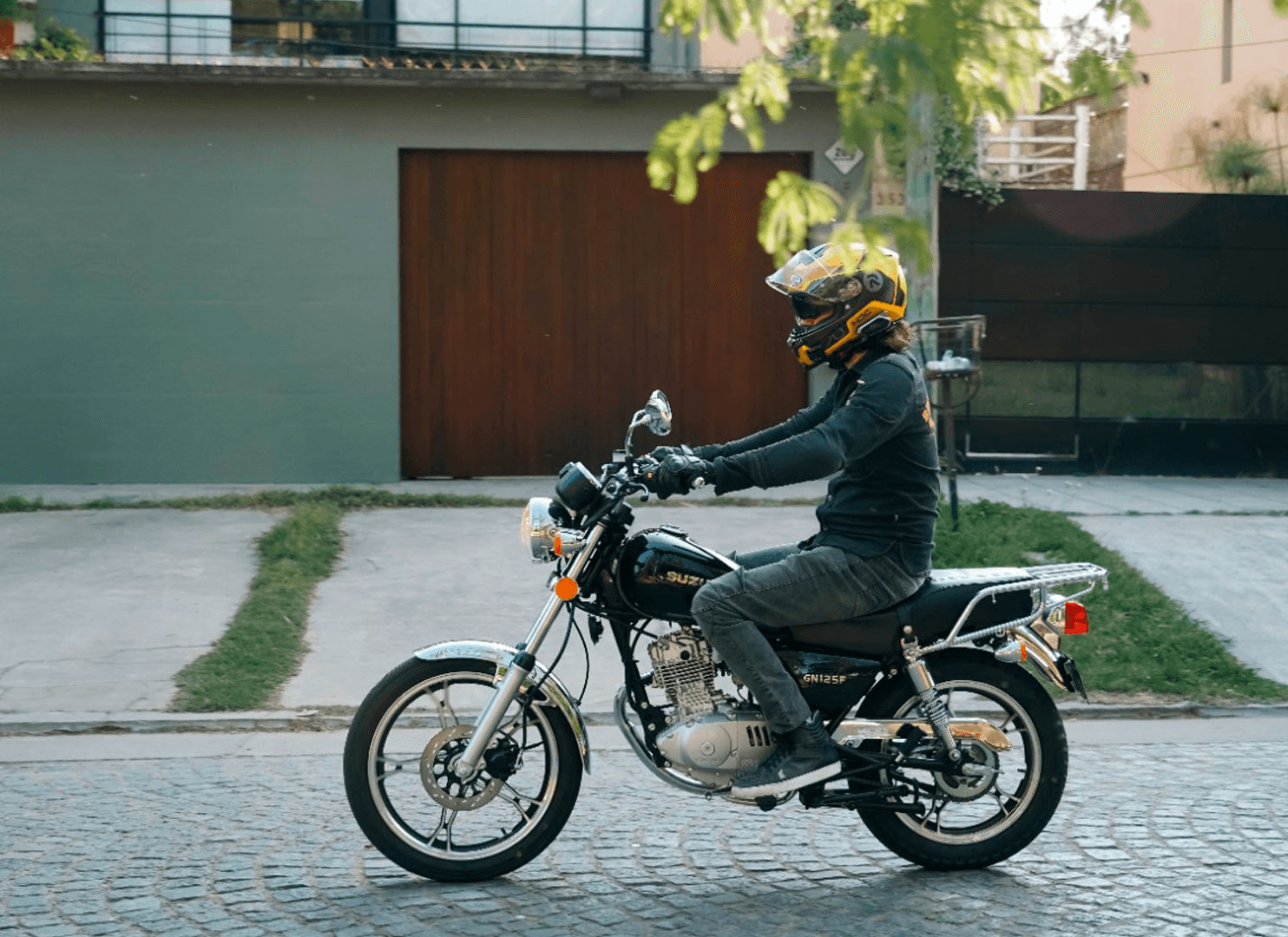
Differences compared to the SR125
Compared to the Yamaha SR125, the GN125 feels a bit less style driven.
The Yamaha leans heavily into the classic SR design language, giving it a stronger retro character. Its seating position is also slightly more relaxed.
The GN125, on the other hand, is more focused on everyday usability and function. Mechanically, it is often considered slightly more robust.
The biggest advantage: the Suzuki features a proper paper oil filter. For a BIFL enthusiast, this is a major plus compared to the simple oil screen in the Yamaha, as it filters fine particles much more effectively. This significantly reduces wear on bearings, especially beyond 50,000 km.
Community voices
In motorcycle forums, the GN125 is often described as a reliable daily companion.
One rider writes:
“My GN125 has been running for over 70,000 kilometers. Adjust the valves, change the oil that’s all it ever wanted.”
Another puts it even more simply:
“It’s not exciting, but it never breaks.”
This combination of low complexity and strong everyday usability is exactly what many BIFL riders are looking for.
Rating:
BIFL engineering (35%): 9/10
BIFL maintenance and repairability (15%): 9/10
BIFL spare parts availability and community support (15%): 9/10
BIFL functionality and everyday usability (15%): 8/10
BIFL economic efficiency (10%): 9/10
BIFL design and emotion (10%): 8/10
BIFLBENTO score: 8.8/10
Yamaha TW125
Used price: around €2,000 to €3,500
The TW series was originally designed as a small all terrain motorcycle.
If there is one bike that looks like it was designed by Mad Max himself for a ride to the beach, it is the Yamaha TW125.
It is the ultimate survival bike of the 125cc class.
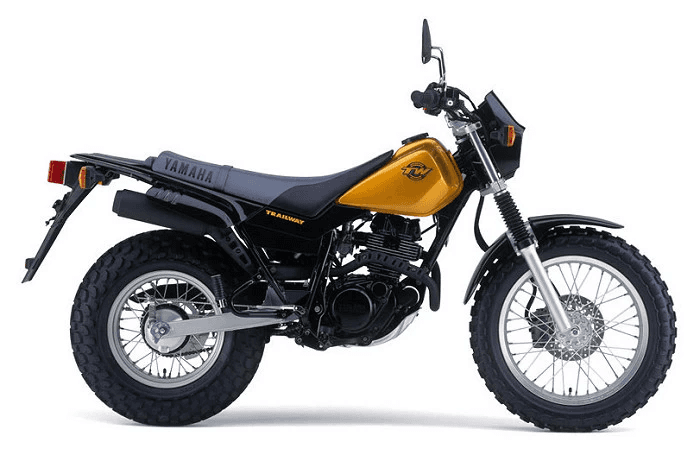
The most distinctive feature: a gigantic 180 rear tire.
The TW is low, wide, and chunky. It gives a sense of security that no other 125cc bike provides.
Due to its compact dimensions, low weight (around 120 kg), and indestructibility, it has been a longtime favorite on the rear racks of world-travel vehicles and vans for decades.
The focus was not on speed, but on:
Reducing mechanical stress through wide tires and long suspension travel
Traction and iconic looks with balloon tires
Stability
Simple engineering
The extremely wide tires were meant to allow riding on surfaces where normal motorcycles would quickly reach their limits:
Sand
Gravel
Forest trails
The bike was designed to be robust, forgiving, and easy to control. This philosophy still defines the TW125 today.
While the SR125 is a classic street bike with retro character, the TW125 is more of a BIFL adventure bike.
It is also worth noting the differences between the TW125 and the XT125:
The XT125 is less focused on comfort and more on offroad enduro use (enduro tires, high seat, stiffer suspension). For many, it is a pure "transitional bike": you ride it for a couple of years, learn enduro riding, and then sell it for something bigger. It is a tool.
The TW125 is a collector's bike. Its bizarre, chunky look encourages owners to form a real connection with it. It is designed to be more practical and user-friendly, with fewer specialized parts.
Community voices
“It’s a tractor with two wheels.”
“I have had my TW for 20 years. It has carried me through mud, desert sand, and the urban jungle. I am more likely to pass it on than sell it.”
This perfectly captures what many riders appreciate about the TW: robustness and forgiving nature.
Rating:
BIFL engineering (35%): 9/10
BIFL maintenance and repairability (15%): 9/10
BIFL spare parts availability and community support (15%): 9/10
BIFL functionality and everyday usability (15%): 9/10
BIFL economic efficiency (10%): 9/10
BIFL design and emotion (10%): 9/10
BIFLBENTO score: 9/10
Conclusion
To build a small, robust motorcycle that can go anywhere while remaining uncomplicated.
Perhaps that is exactly why so many owners keep their TW125 for so long.
Honda Super Cub 125
Used price: €2,000 – €3,500
This motorcycle is not just a vehicle, it is a piece of history. The Super Cub is the best-selling motorcycle in the world, with over 100 million units produced.
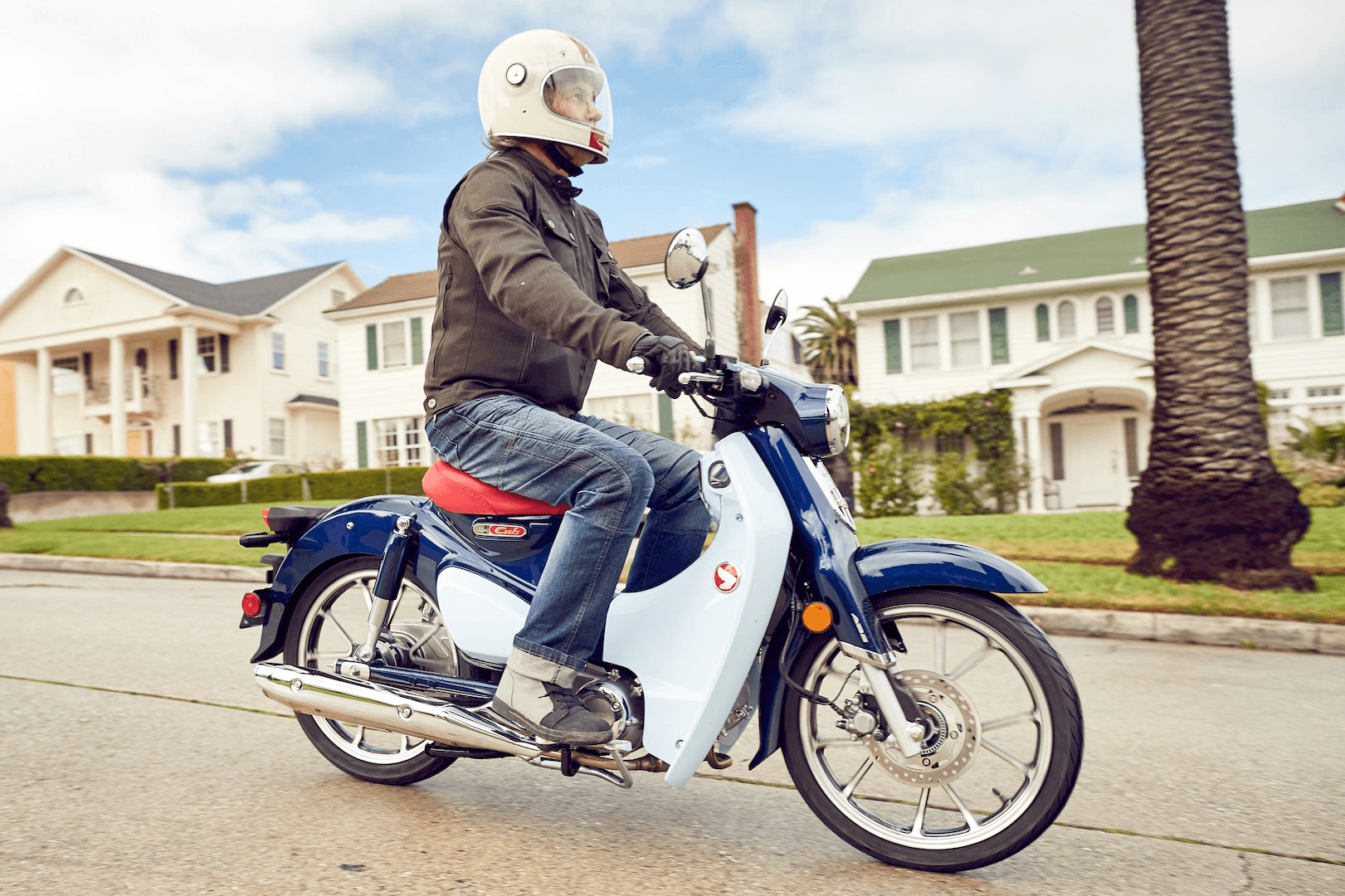
The Birth of an Icon
Soichiro Honda had a vision in 1958: a motorcycle “that anyone can operate, even with one hand while carrying groceries.” He observed noodle delivery riders in Tokyo who rode bicycles with one hand and designed the iconic step-through frame with the ingenious centrifugal clutch. You still shift with your foot (3-4 gears) but do not need a hand clutch lever.
The „Nice"-Factor: In the 1960s, Honda revolutionized the image of motorcycling with the slogan “You meet the nicest people on a Honda.” The Super Cub is the friendliest motorcycle in the world. It never provokes, it smiles.
The Step-Through Design: Ideal for any clothing, age, and body size. It is the democratization of mobility.
The BIFL Secret: Why It Never Dies
The Super Cub earns the BIFL crown through a combination of ingenious design and extreme under-stressing.
Horizontal single cylinder: The horizontal engine provides perfect weight distribution and is ideally cooled by airflow. It is considered mechanically indestructible. In Asia, these engines often reach 100,000 km without ever being opened.
Enclosed chain case: A true BIFL highlight. The chain runs inside a closed metal casing, protected from dirt, sand, and rain. While normal chains wear out after about 15,000 km, chains in the Super Cub often last three times as long with minimal maintenance.
Semi-automatic: The centrifugal clutch eliminates a common user error: “grinding” the clutch. The system is so robust that it lasts almost indefinitely.
Community voices
The global Cub community is huge and full of legends:
“In Vietnam, these machines have been carrying refrigerators, ladders, and half families for 40 years. What could possibly go wrong in my daily life?”
“It is the only motorcycle I own where I don’t worry about theft when I park outside a café.”
Weaknesses
Range: The tank under the seat is small (about 3.7 liters), but the Super Cub consumes less than 2 liters per 100 km when ridden economically.
Passenger: Many models do not have a passenger seat, which limits everyday usability.
Maintenance access: The enclosed design protects the engine and chain but requires a few extra steps during maintenance.
Rating:
BIFL engineering (35%): 10/10
BIFL maintenance and repairability (15%): 10/10
BIFL spare parts availability and community support (15%): 9/10
BIFL functionality and everyday usability (15%): 8/10
BIFL economic efficiency (10%): 10/10
BIFL design and emotion (10%): 6/10
BIFLBENTO score: 9,2/10
Conclusion
The Honda Super Cub is the motorcycle of reason when it comes to pure mobility. If you are looking for a historically significant bike that meets all BIFL criteria, and you like the “scooter” style, the Super Cub is your ultimate BIFL champion.
Buyers FAQ 🙋
How long does a 125cc motorcycle last?
On average, the community reports that modern motorcycles experience their first costly problems after about 30,000 km.
With good maintenance, however, 50,000 to 80,000 km is possible.
Our BIFL models, according to high-mileage reports, can exceed 100,000 km. This does not mean that nothing ever breaks, but the parts for these bikes are available and affordable.
New or used?
Since new motorcycles generally do not meet BIFL criteria or lack long-term data, it is better to buy used. This is also better for the environment.
Tips for buying used
Compare the engine and frame numbers with the papers, check the chain and sprockets for wear (an indicator of maintenance), inspect wear parts, take a test ride, and check the frame and bodywork for damage or signs of accidents.
Carburetor or fuel injection (EFI)?
This is largely a matter of preference. A carburetor is mechanically simple and can be cleaned worldwide with a brush.
Fuel injection (standard since around 2008 and mandatory in the EU) is more reliable in everyday use, offers better cold-start behavior, and does not gum up after long periods of inactivity. Modern EFI is often the lower-stress choice, even if it is not as BIFL as a carburetor.
Why not an electric 125cc as BIFL?
Currently, electric 125s fail the BIFL test due to battery degradation and the lack of standardized batteries. A 1990s gasoline engine will still run on fresh fuel in 20 years – a proprietary battery today becomes electronic waste.
Which brand is the most reliable?
If you have to choose a single manufacturer, everyone agrees: Honda.
In general, the four major Japanese brands (Honda, Yamaha, Suzuki, Kawasaki) are safe bets.
Buying a no-name bike might save you 500 euros today, but in five years you may struggle to find a specific replacement part. BIFL often fails not because of the metal, but because of logistics.
Which model year or version matters?
Models that best meet BIFL criteria were built roughly between 1990 and 2010. Our analysis always considers models that have existed for at least ten years.
What about other engine sizes?
125cc: Ideal for beginners and offers the advantages mentioned above.
200-250cc: Often not worth it, as they lose many of the class advantages of 125cc bikes. Riders frequently report that the jump from 125cc to 200-250cc is not as noticeable as expected. For a significant increase in power, consider three times the performance/torque.
300-450cc: Perfect for city riding.
600cc: Ideal all-round size for all roads (e.g., Suzuki SV650).
Above 600cc: Geared toward motorcycle enthusiasts who want a more sporty experience.
Summary🏆
Do you just want to buy a motorcycle – or do you want a motorcycle you will want to keep? That is the difference that separates BIFL from ordinary consumption.
Buying a motorcycle that you want to keep "forever" is today a rebellious act against the throwaway society. For a 125cc bike, BIFL does not mean that nothing ever breaks. It means the motorcycle is designed so honestly and logically that it is always worth repairing.
The golden BIFL formula
Respect the warm-up phase: Give the oil some kilometers to reach operating temperature before opening the throttle fully.
Oil is life: With only one liter of oil in the system, there are no excuses for good maintenance. Change it once too often rather than too rarely.
Choose character over horsepower: A 125cc bike will not win drag races. But a machine like the Super Cub or the TW125 will win your heart. And only what you love will you care for over decades.
The BIFL 125cc Bikes for True Enthusiasts
Model | The BIFL Promise | Ideal for ... |
Honda CG125 | The mechanical final boss. Thanks to the OHV engine without a timing chain, it is the lowest-maintenance powertrain in the world. | Purists looking for a bike built to last forever without any frills. |
Suzuki VanVan 125 | The emotional heart. Cult design, fat tires, and an indestructible engine that you just have to love. | Campers and individualists who want a bike with soul and high value retention. |
Yamaha TW125 | The indestructible tractor. With the genes of the legendary XT series and massive balloon tires, ready for any adventure. | Adventurers and off-road fans who value robustness over top speed. |
Honda Super Cub 125 | The world heritage on two wheels. Incredibly efficient, legendary reliability, and thanks to the enclosed chain, almost maintenance-free. | Style-conscious commuters and urban aesthetes who want to ride an icon. |
Suzuki GN125 / Yamaha SR125 | The uncomplicated classics. Two honest soft choppers with the simplest technology, still "just working" even after decades. | Beginners and nostalgics looking for a handy, solid motorcycle. |
Good luck finding your "forever bike." Your future self will thank you in twenty years when you are still smiling at your purring motorcycle.
(MA)
Help you find your forever- favorites.
No spam, unsubscribe anytime.